Tree Service · Allen, TX
Tree Service in Plano, TX
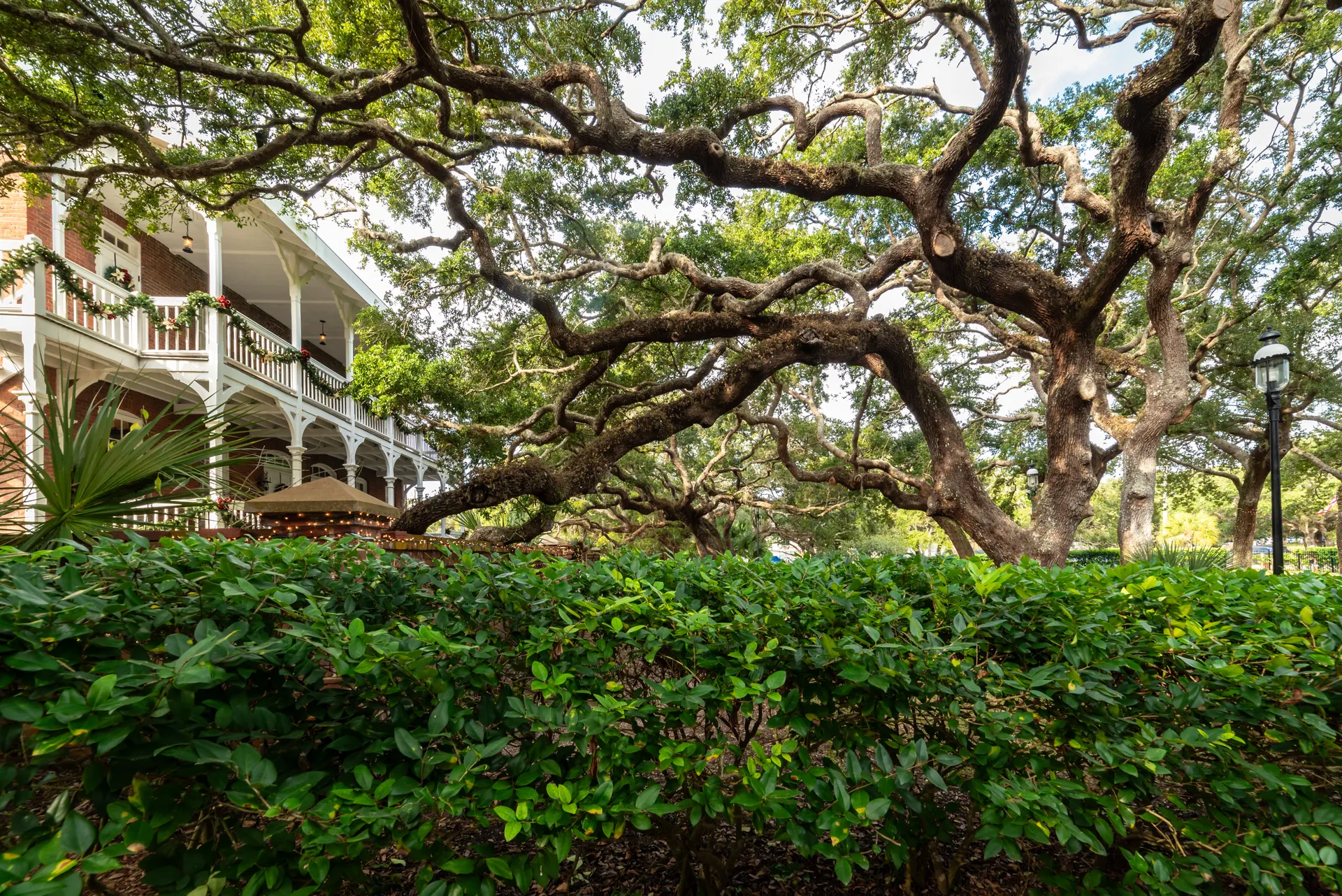
Plano sits about 7 miles south of Allen along US-75, between the Central Expressway and the Dallas North Tollway, and carries one of the heaviest mature tree canopies anywhere in Collin County. At Tree Service Allen Woods Co, the arborists and crews we coordinate work Plano constantly, covering everything from a 200-year-old park specimen to a stressed green ash near Legacy West. Plano incorporated in 1873 but grew explosively in the modern era — from 17,872 residents in 1970 to 285,494 by the 2020 census, roughly sixteen-fold in five decades across 72.04 square miles bounded by US-75, the Dallas North Tollway, SH-190, SH-121 and Preston Road.
That growth is why Plano's canopy is now cluster-maturing at scale. The city built out subdivision trees from the 1970s through the 2000s, planted close to homes, driveways and utility lines and now reaching the size where clearance pruning, structural correction and removal cluster together on the same streets. Plano's older neighborhoods hold a large green ash population, putting the city squarely in the path of emerald ash borer, confirmed inside the Dallas metro. Add a wide stock of 1980s-90s Bradford and ornamental pears — weak-wooded and prone to splitting in North Texas storms — and Plano generates steady removal and storm-cleanup work on a predictable cycle.
Plano is also a Tree City USA member with an established tree preservation ordinance, and its native canopy survives at scale inside the 200-acre Arbor Hills Nature Preserve and the 800-acre Oak Point Park and Nature Preserve, where Cross Timbers woodland and bottomland hardwoods remain intact along the creek corridors. Whether the job is a 200-year-old park-adjacent oak, a green ash slated for EAB treatment, or a Bradford pear split in the last storm, call (469) 991-2798 — Open 24 Hours, with a crew that knows Plano's neighborhoods block by block.
Local Service
Tree Care for Plano's Heaviest Mature Canopy in Collin County
Plano's parks hold specimens reported over 200 years old, and its older streets carry some of the densest, largest mature canopy in the county — a distinct set of tree-health and structural challenges.
Emerald Ash Borer Treatment for Plano's Green Ash Population
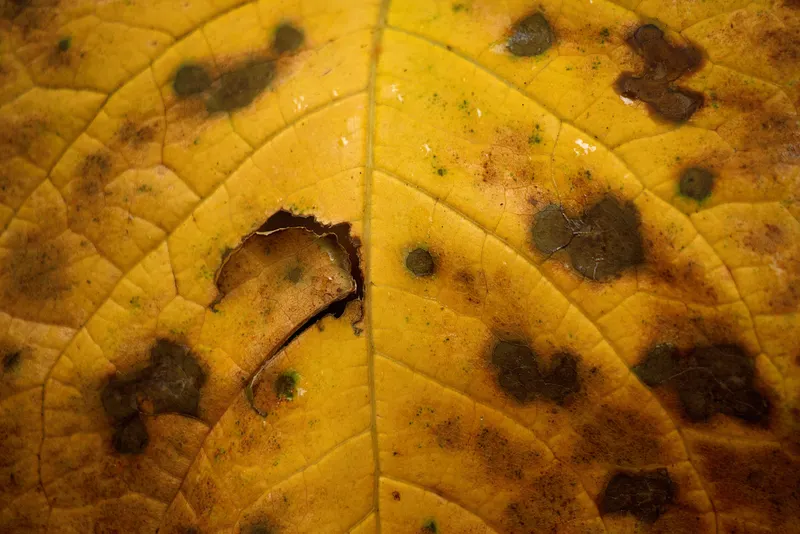
Plano's older neighborhoods carry a large green ash population, and emerald ash borer is confirmed inside Dallas city limits and across roughly three dozen Texas counties — a beetle whose larvae girdle a tree under the bark and typically kill an untreated ash within a few years. Dallas' Great Trinity Forest is estimated at about 40% ash.
A trunk-injection protocol, generally under an hour per tree on a multi-year cycle, is the standard defense when caught early. We evaluate each Plano ash for canopy thinning and bark splitting before recommending treatment versus removal.
Removal & Structural Care for Plano's 200-Year-Old Specimen Trees
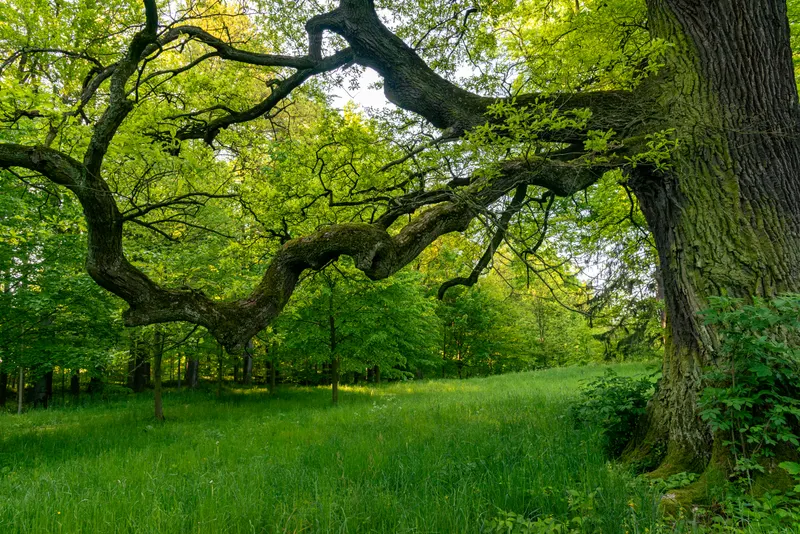
Plano's parks hold trees reported over 200 years old, and the older blocks around them carry oaks, elms and pecans of significant size — trees that demand real rigging skill and directional-felling judgment when removal is unavoidable, and careful pruning when it isn't. A large removal typically runs $2,500 to $5,000, climbing to $5,000-$15,000-plus with crane support on the biggest specimens.
When a legacy tree can be saved, ANSI A300 pruning — capped at roughly 25% live-canopy removal a year — extends its life without shortcutting its form.
Bradford Pear Storm Cleanup Across Plano's 1980s-90s Subdivisions
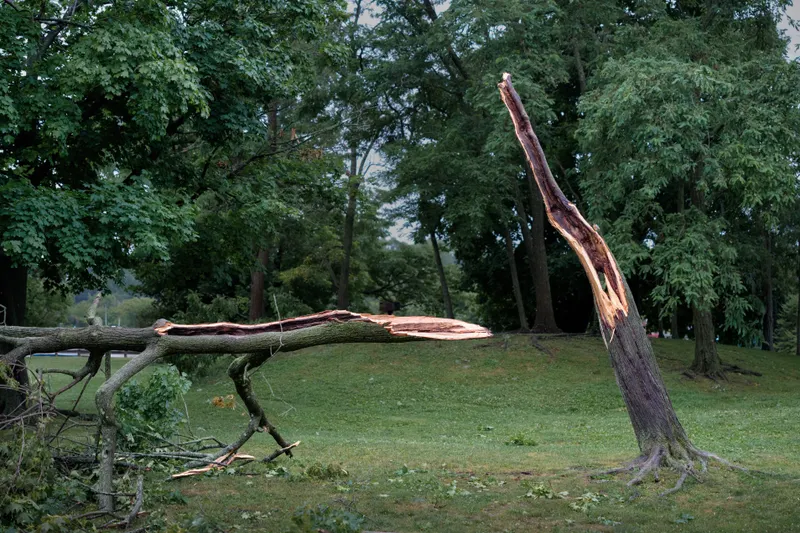
Bradford and other ornamental pears were planted heavily across Plano's 1980s-90s subdivisions for fast growth and spring bloom, but the species is notoriously weak-wooded — narrow branch angles and included bark make it prone to splitting in violent spring storms, hail and wind. That failure pattern is one of the most consistent calls across Plano's streets.
When a Bradford pear splits, same-day emergency removal keeps a hazard off a driveway, with full debris haul-off included.
Local Service
Tree Preservation and Nature Preserve Coverage in Plano
As a Tree City USA member with its own preservation ordinance and two major nature preserves inside city limits, Plano's tree rules and native-woodland exposure run deeper than most suburbs on our route.
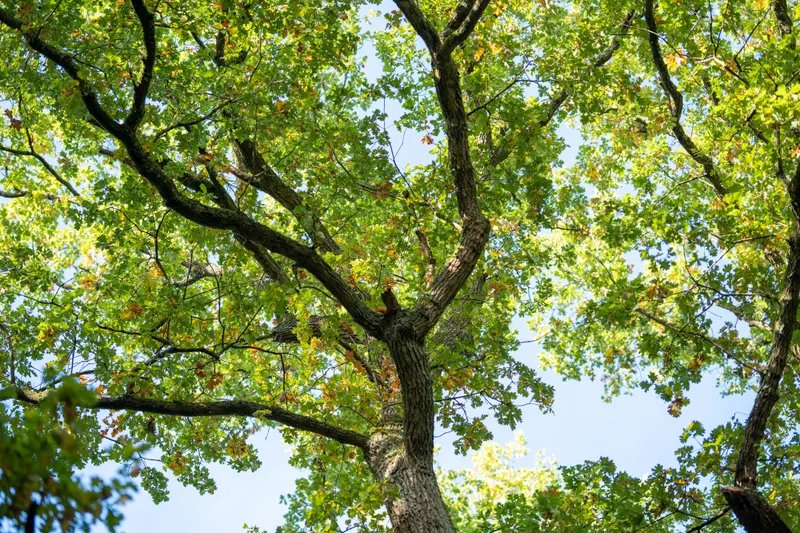
Permit Coordination Under Plano's Tree Preservation Ordinance
Plano is a Tree City USA member with an established tree preservation ordinance, and protected-tree removals route through the city's urban-forestry permitting process — the current caliper threshold and any replacement requirement need confirming per address.
The crews we coordinate handle the permit application and inspection scheduling as part of the work, so a Plano owner isn't tracking down which office to call.
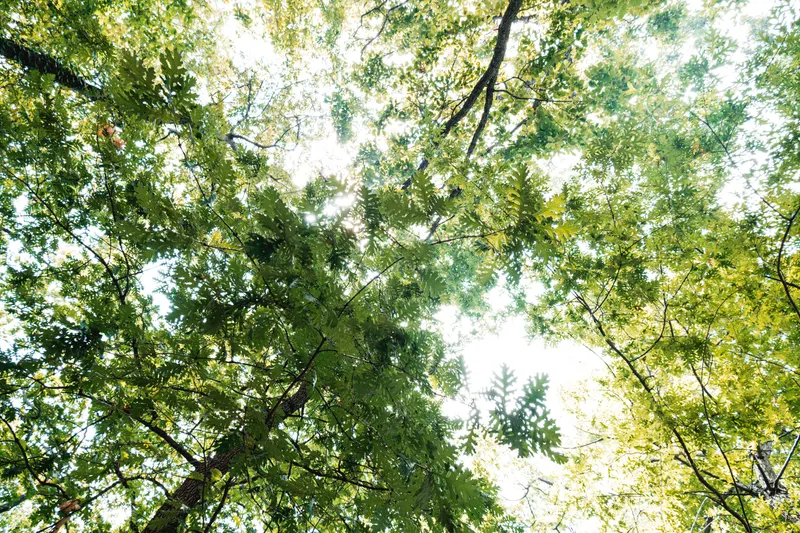
Native Woodland Access Near Arbor Hills and Oak Point
The 200-acre Arbor Hills Nature Preserve and the 800-acre Oak Point Park and Nature Preserve protect intact Cross Timbers woodland and bottomland hardwoods along Plano's creek corridors, and properties bordering either preserve often back directly onto native tree cover rather than a manicured lot line. That means real hazard trees — dead limbs, leaning trunks, storm-damaged natives — hanging over a fence line from land that isn't the homeowner's to clear.
We assess boundary-line hazard trees carefully, since work near a preserve edge sometimes involves confirming which side of the line a tree sits on.
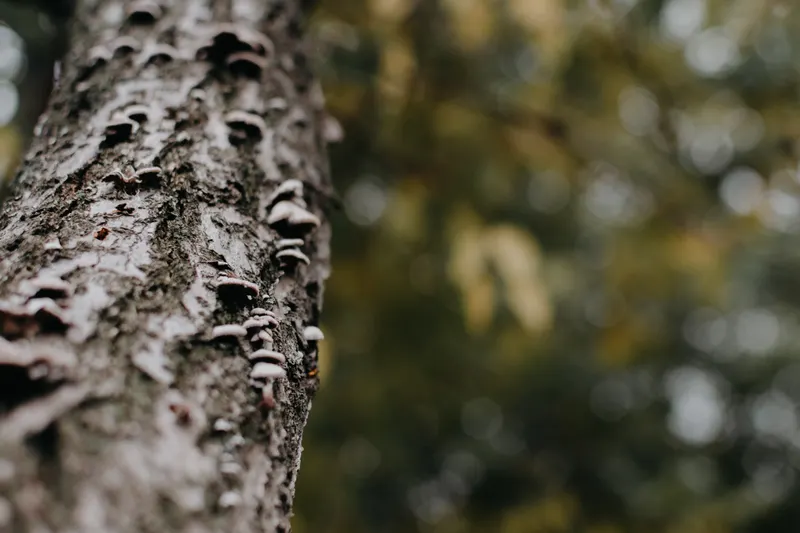
Hypoxylon Canker on Plano's Drought-Stressed Legacy Trees
Hypoxylon canker is an opportunistic fungus that colonizes hardwoods already weakened by Texas drought and heat stress, and Plano's dense population of older, larger oaks and elms — decades past prime vigor — are exactly the profile it targets. It typically shows up as a tree already in decline, bark sloughing to reveal a silvery-gray to black fungal mat underneath.
By the time it's visible, the wood is often structurally compromised, so we treat a confirmed case as a hazard-assessment priority, not a routine trim.
Local Service
Fast, Local Response Across All of Plano
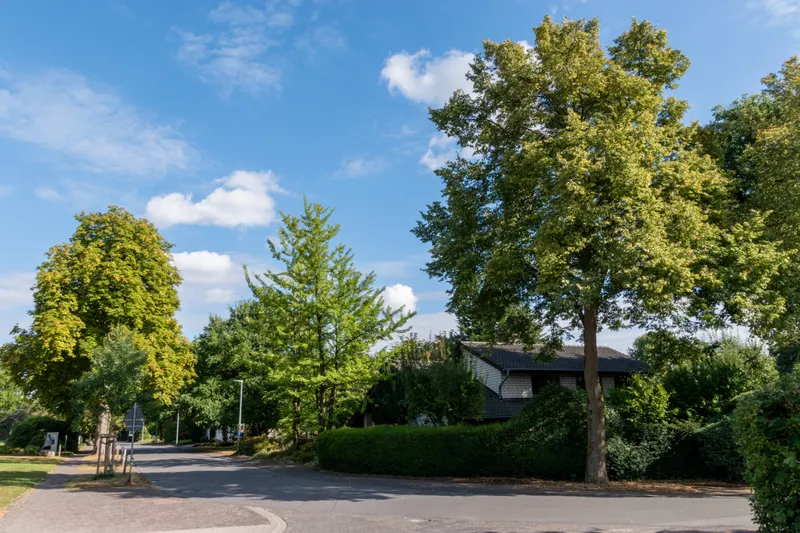
Coverage of Every Plano ZIP, 75023 Through 75094
We cover Plano's ZIP codes — including 75023, 75024, 75025, 75074, 75075 and 75093 — with the same fixed-quote process and scheduling priority whether near Downtown Plano, Legacy West or Los Rios. Plano's growth from 17,872 residents in 1970 to 285,494 by 2020 means there's rarely a week without multiple jobs running.
That familiarity with Plano's neighborhoods, HOA rules and lot layouts means faster evaluation and a quote reflecting the actual job, not a drive-time guess.
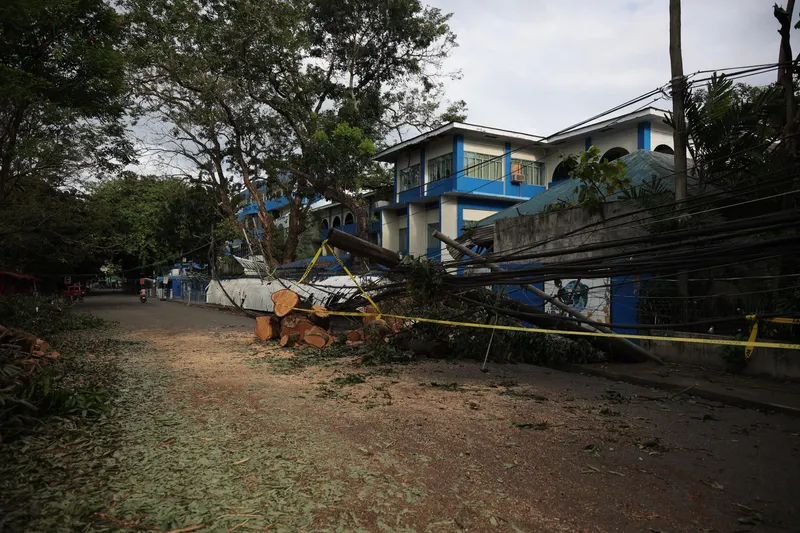
24/7 Storm Response Along US-75 and the Dallas North Tollway
Plano's corridor between US-75 and the Dallas North Tollway sees the same violent North Texas spring storm season as the metroplex — hail, straight-line winds and occasional ice that snap weak-wooded Bradford pears and drop limbs from the city's older canopy. We treat every storm call as same-day make-safe work.
Full cleanup and haul-off typically follow once secured, and dispatch already knows Plano's neighborhoods well enough to move fast.
Serving Plano and McKinney Together
Plano and McKinney sit on opposite sides of Allen along the same US-75 corridor, and a crew wrapping up an EAB treatment in Plano is frequently minutes from a McKinney job. Both cities share real oak wilt and emerald ash borer exposure, distributed differently — Plano's dense green-ash and legacy oaks versus McKinney's heritage downtown canopy.
That overlap means a Plano property isn't waiting on a special trip — the coordinated arborists already work this stretch of Collin County daily.
Plano's combination of one of Collin County's heaviest mature canopies, a large green-ash population exposed to emerald ash borer, and a wide stock of storm-prone Bradford pears makes it one of the most tree-health-intensive cities on our route. The full Allen tree service coverage area extends south to Plano along US-75, and the same arborists work McKinney just across Allen to the north.
Whether a Plano property needs a legacy specimen structurally pruned, a green ash evaluated for tree health care before emerald ash borer takes hold, or a split Bradford pear cleared after a storm, the crews we coordinate handle tree removal, tree trimming, stump grinding and emergency tree service across every Plano ZIP. Call (469) 991-2798 any time — Open 24 Hours, dispatch knows this city block by block.
Service Area
Serving Plano & Nearby
Frequently Asked Questions
How much does tree removal cost in Plano?
Small tree removal up to 30 feet typically runs $200 to $800, a medium tree between 30 and 60 feet runs $800 to $2,500, and a large tree between 60 and 80 feet runs $2,500 to $5,000. Plano's legacy specimen trees — some reported over 200 years old in the city's parks and older neighborhoods — can require crane support or hazardous-access work running $5,000 to $15,000 or more. Hardwood species common across Plano, like oak, also cost 20 to 30% more to grind and remove than softer wood because of density. We give a written quote after an on-site assessment of the tree's size, condition and access, never a phone-only estimate.
Do I need a permit to remove a tree in Plano?
In most cases, yes — Plano is a Tree City USA member with an established tree preservation ordinance, and protected-tree removals route through the city's urban-forestry permitting process, with the current caliper threshold and replacement requirements needing confirmation per address. Dead, diseased and clearly hazardous trees generally move through review fastest, since they represent a safety concern rather than a preservation conflict. A healthy tree above the protected caliper typically requires the fuller process. We confirm Plano's current requirement for your specific property and handle the permit application and inspection scheduling as part of the job.
Is emerald ash borer a serious threat to Plano's trees?
Yes, and Plano is one of the more exposed cities on our route because its older neighborhoods carry a large population of green ash. Emerald ash borer is confirmed inside Dallas city limits and across roughly three dozen Texas counties, and Dallas' nearby Great Trinity Forest is estimated at about 40% ash — a snapshot of how much ash inventory sits in the beetle's path regionally. An untreated ash typically dies within a few years once larvae girdle the trunk under the bark. Trunk-injection treatment, generally under an hour per tree on a repeated multi-year cycle, is the standard defense when caught early, and U.S. landscape-value losses from a full ash die-off have been estimated at $7.7 to $15 billion nationally.
Why do so many Bradford pear trees split apart in Plano?
Bradford and other ornamental pears were planted heavily across Plano's 1980s-90s subdivisions for fast growth and spring bloom, but the species has a structural flaw: narrow branch angles and included bark that never form a strong union, making the tree prone to splitting apart under wind load or ice weight. North Texas's violent spring storm season — hail, straight-line winds, occasional ice — is exactly the stress that triggers that failure pattern, and it's one of the most consistent calls we field across Plano's older subdivisions. Once a Bradford pear splits, same-day emergency removal is usually the right call, since a partially split tree remains hazardous even if it's still standing.
What is hypoxylon canker and does it affect Plano's older trees?
Hypoxylon canker is an opportunistic fungus that colonizes hardwoods already weakened by Texas drought and heat stress, and it typically shows up as a tree already declining rather than a sudden new threat. Plano's dense population of older, larger oaks and elms — some decades past peak vigor — fits the exact profile this fungus targets, especially after a dry summer. Visually, it often appears as bark sloughing away to reveal a silvery-gray to black fungal mat on the wood underneath. By the time it's visible, the affected wood is frequently structurally compromised, so we treat a confirmed case as a hazard-assessment priority.
When is it safe to prune oak trees in Plano?
Texans are urged not to prune or wound oak trees from February through June, since that's when the oak wilt fungus and its beetle vector are most active, and a fresh cut is precisely the kind of wound the disease uses to enter a tree. Plano's older neighborhoods and legacy park trees include significant oak inventory, which raises the stakes of pruning at the wrong time of year even though the city's ash and Bradford pear issues get more attention. Outside that window, oak pruning carries considerably lower risk. If a Plano oak needs emergency work during the restricted season, we treat the wound appropriately rather than skipping necessary safety work.
Do you offer 24/7 emergency storm response in Plano?
Yes — we're Open 24 Hours, and Plano's exposure to North Texas's violent spring storm season, combined with its unusually heavy mature canopy and wide stock of storm-prone Bradford pears, means emergency calls get same-day make-safe response, not next-week scheduling. A downed limb over a driveway, a split pear tree near a walkway, or a leaning legacy oak after high winds all qualify for immediate dispatch. Full cleanup and debris haul-off typically follow once the property is secured and safe. Call (469) 991-2798 any time, and the coordinated crews already familiar with Plano's neighborhoods respond directly.
How much of a tree can be trimmed at once in Plano?
ANSI A300 pruning standards direct that no more than about 25% of a tree's live canopy be removed in a single year — a limit that matters especially for Plano's legacy specimen trees, some reported over 200 years old, where over-pruning can trigger stress responses and reduced vigor that a young subdivision tree would tolerate more easily. The arborists we coordinate with plan multi-year pruning schedules for trees needing more extensive structural correction rather than forcing it into one visit. We never top a tree or endorse 'crape murder' shortcuts on Plano's crape myrtles or shade trees, regardless of how overgrown they've gotten.
Do you grind the stump and haul away all the debris after a Plano tree removal?
Yes — full cleanup and haul-off is standard, not an upsell, on every Plano job. Stump grinding is typically priced at $2 to $5 per diameter inch with a roughly $300 minimum, taking about 30 minutes to 2 hours depending on the stump's size and root spread; hardwood species like the oaks common in Plano's older neighborhoods cost 20 to 30% more to grind than softer wood because of density. After grinding, we haul off the ground material and any remaining limb or brush debris, including from Bradford pear storm cleanup, so the property is left clean. Backfilling the resulting hole is included in the standard job.
How do you handle Plano's legacy specimen trees?
The tree crews and arborists we coordinate with on every Plano job follow ANSI A300 pruning and ANSI Z133 safety standards on every removal, trim, and storm response. Many hold the arborist credential, which requires ongoing continuing education to maintain, and some carry years of specimen-tree experience or formal tree-risk assessment training for hazard evaluation — relevant given how many legacy specimen trees sit in Plano's older neighborhoods and parks. We coordinate these credentialed pros rather than run a single in-house crew, matching Plano's varied job types with the right specialists. Ask for the written scope before a crew starts on your property.
How long does a tree removal or trimming job take in Plano?
A standard tree removal with good access generally takes a few hours to a full day, while a large or crane-assisted removal — more likely on Plano's biggest legacy specimens near Arbor Hills or Oak Point — typically runs 1 to 2 days. Routine trimming or pruning on a single tree usually takes 1 to 4 hours depending on size and scope. Stump grinding adds 30 minutes to 2 hours once the tree is down. Emergency Bradford pear or storm-damage calls are handled same-day for the make-safe portion, with full cleanup sometimes following on a separate visit.
Get a Fixed-Price Tree Care Quote for Your Plano Property
arborists, ANSI A300/Z133 standards, Open 24 Hours.
(469) 991-2798