Tree Service · Allen, TX
Tree Cabling & Bracing in Allen, TX
Tree Service Allen Woods Co coordinates tree cabling and bracing across Allen, McKinney, Plano, Fairview, and the wider Collin County stretch of Dallas–Fort Worth — 15 years of local coordination, calls answered 24 hours a day. The arborists coordinated here install dynamic synthetic cabling, static steel cable, and threaded brace rods to ANSI A300 Part 3, the supplemental-support-systems standard, to keep a structurally weak but otherwise valuable tree standing instead of coming down.
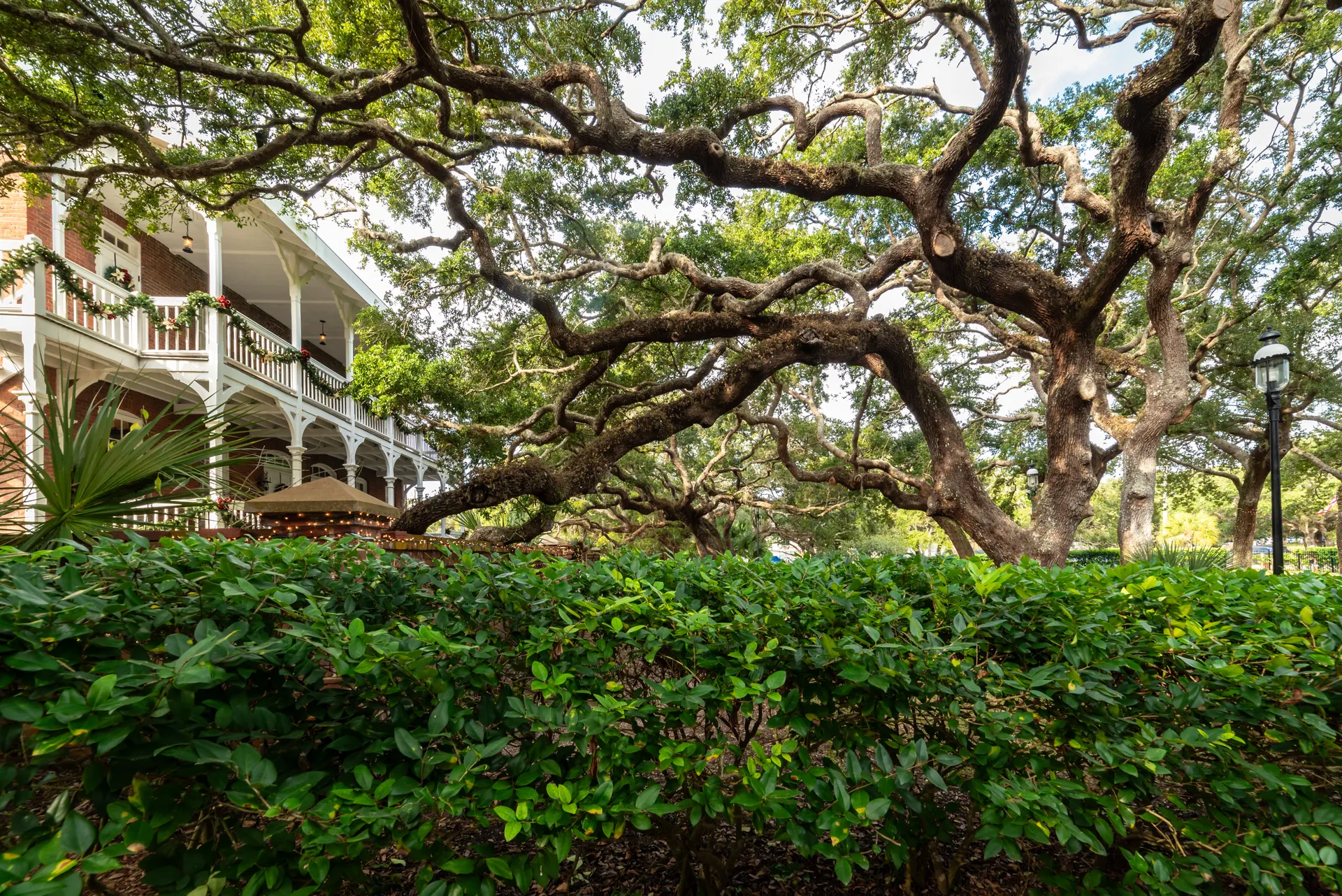
Allen grew more than 470% between 1990 and 2020, and most of the big front-yard live oaks and red oaks shading streets near Celebration Park and Bethany Lakes Park were planted in that same subdivision boom — trees now mature enough to carry co-dominant leaders and included-bark unions that never fully fused. Blackland Prairie clay swells and shrinks hard through the seasons, heaving root plates and adding lateral stress to any union that's already weak, which is exactly the failure point cabling and bracing are built to reinforce before a storm finds it first.
This page covers structural support — hardware installed to keep a tree standing, not the work of taking one down or shaping its canopy. A tree that's already failed or become a hazard belongs on tree removal; routine crown work that reduces the weight cabling has to carry is tree trimming & pruning. Cabling and bracing sit between those two jobs, buying a valuable tree years of life it wouldn't otherwise have.
Every installation starts with an arborist risk assessment of the union's condition, species, and what sits below it, then hardware is sized and placed to ANSI A300 Part 3 specifications — never a one-size cable spooled off a truck. Allen homeowners get an honest answer on whether a tree is a good cabling candidate before any hardware goes in, and a free written quote either way.
What We Do
Our Tree Cabling & Bracing Services in Allen
Not every weak union needs the same hardware. A young co-dominant leader, a mature oak with heavy horizontal limbs, and a lightning-vulnerable heritage tree each call for a different support system — here's how the coordinated arborists match hardware to the tree.
Dynamic (Synthetic) Cabling Systems
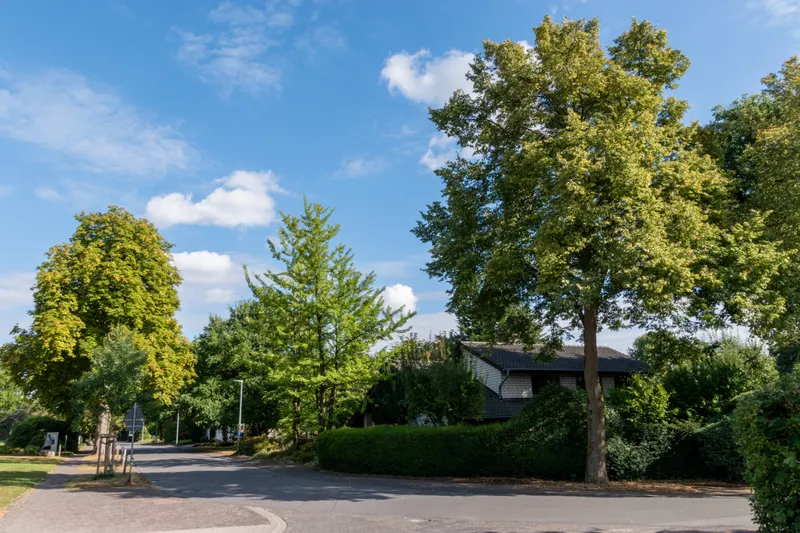
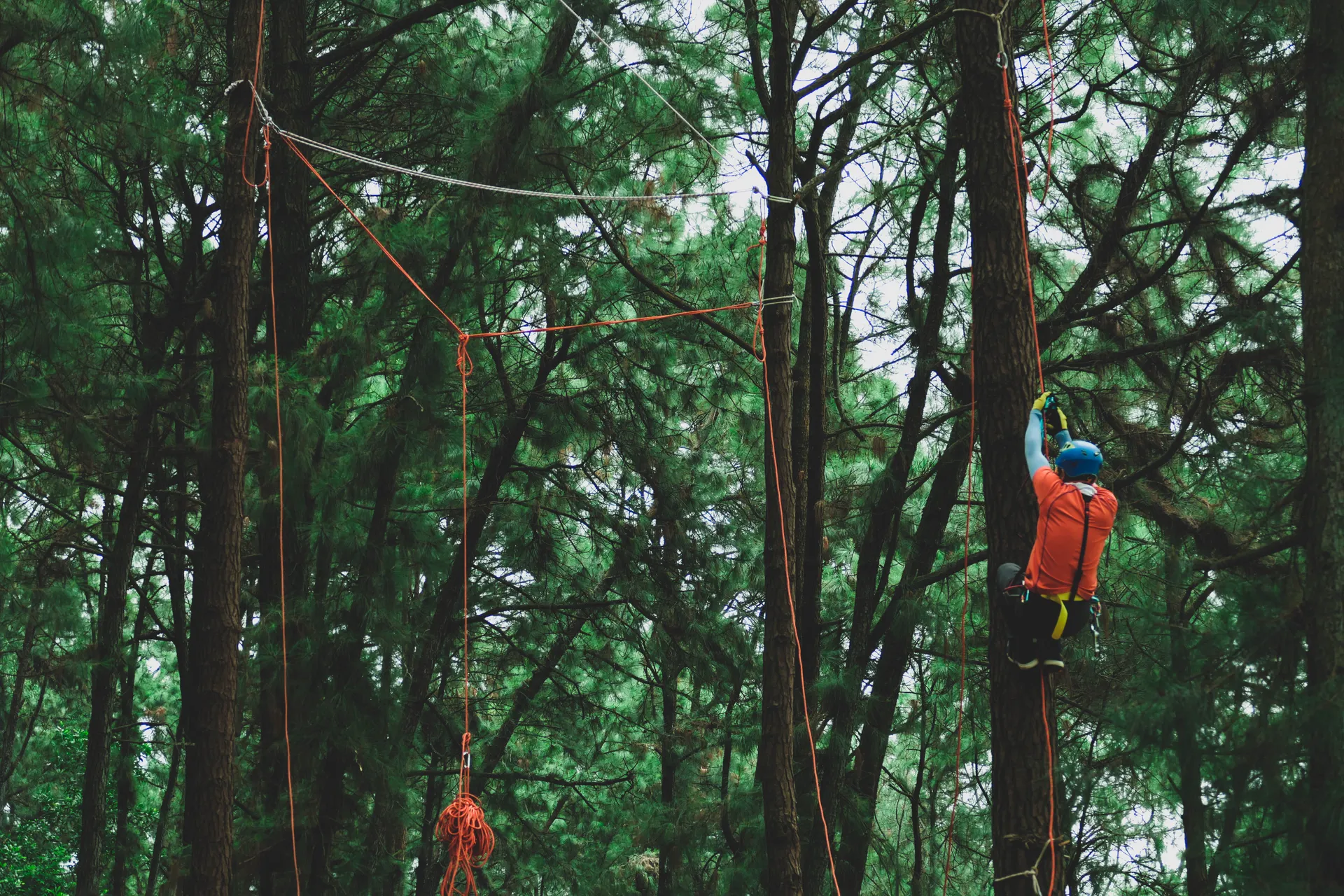
Dynamic cabling uses a non-invasive synthetic rope system installed high in the crown, letting the two stems flex and move naturally instead of locking them rigid. It's the preferred choice for a young or moderately included co-dominant union — the kind common on 1990s and 2000s subdivision oaks — where some natural movement actually helps the tree build reaction wood around the weak point over time.
Installation requires no drilling into live wood, which matters on a tree that's otherwise healthy and simply needs the extra margin while it keeps growing.
Static Steel Cabling & Threaded Brace Rods
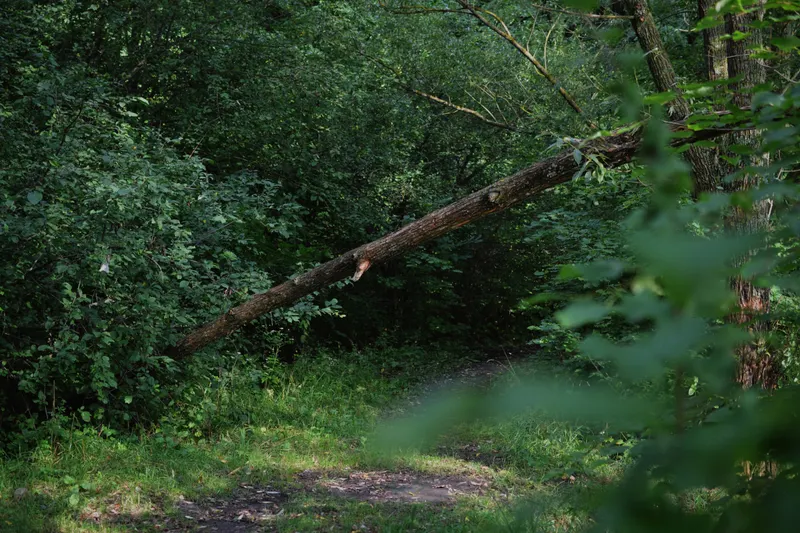
A more advanced union — a heavy horizontal limb over a driveway, a split leader already showing separation, or included bark that's progressed too far for a flexible system — calls for extra-high-strength steel cable installed rigid, sometimes paired with threaded brace rods drilled through both stems below the union. The rod acts like a bolt holding the split closed, while the cable overhead takes the wind load off it.
This combination is standard practice on the large mature live oaks and pecans that dominate older Allen and Fairview lots, where the tree is too valuable to risk losing outright.
Lightning Protection Systems
A tall, isolated specimen tree — a heritage oak standing alone on an acreage lot or shading a home near Watters Creek at Montgomery Farm — takes a disproportionate lightning-strike risk during North Texas's violent spring storm season. A lightning protection system runs a copper conductor from the crown down to grounding rods, giving the strike a path around the tree's living tissue instead of through it.
It's a smaller, targeted install compared to cabling, usually added alongside a support system on the same specimen tree rather than as a standalone job.
The Benefits
Why Cabling and Bracing Beats Removal for a Valuable Tree
Removing a mature shade tree costs more than the invoice — it costs the shade, the canopy value, and years of growth that can't be replaced overnight. Here's what a properly installed support system actually buys.
Saving a Tree Worth More Than Its Removal Cost
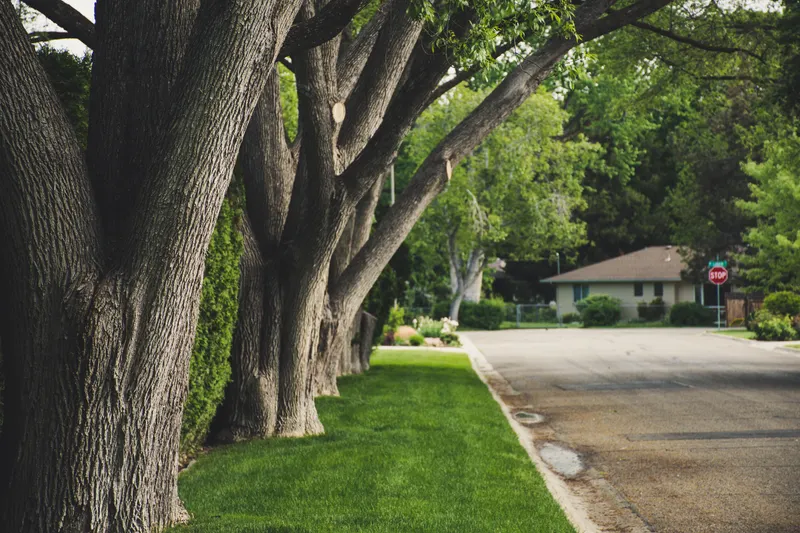
A large, mature live oak or red oak with a structurally weak union is often still a healthy, valuable tree everywhere else — the kind that would cost thousands of dollars to remove and decades to replace with anything comparable. Cabling and bracing address the one weak point without touching the rest of the tree, which is usually the more economical call once a homeowner sees the alternative priced out as a full removal instead. It's the same logic behind saving an old roof instead of tearing off the whole house.
Protecting the House, Driveway, and Cars Underneath
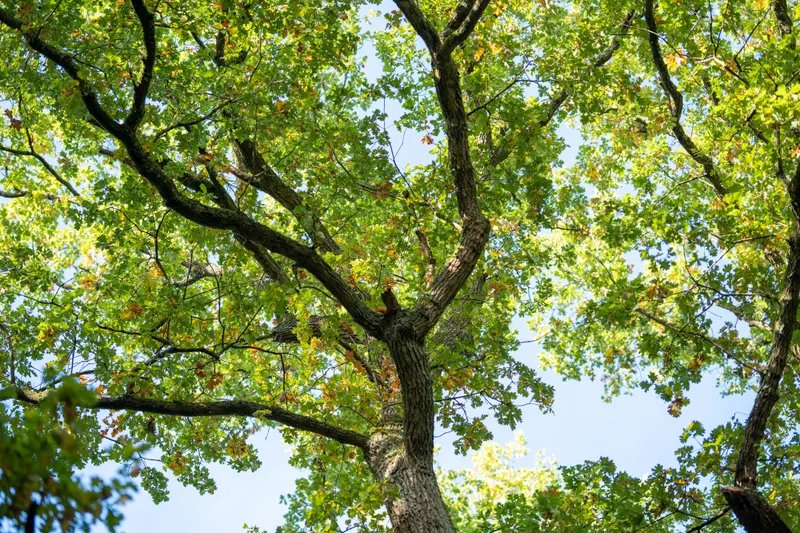
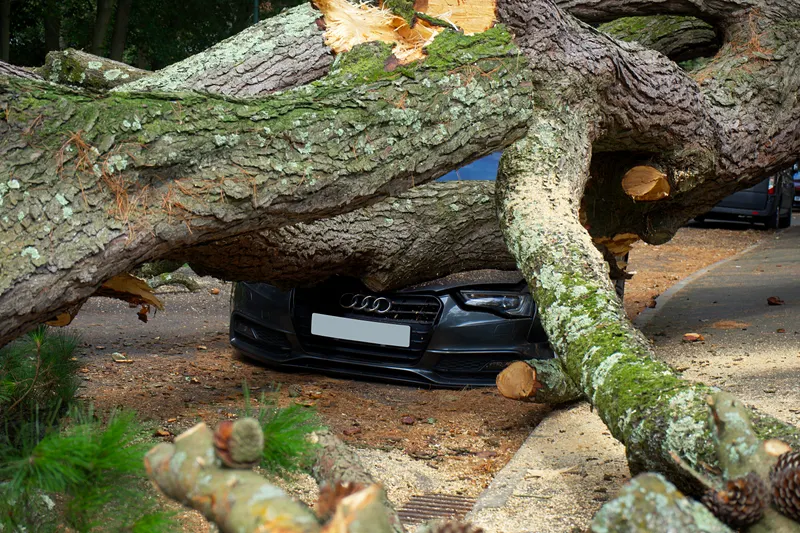
A split leader or an included-bark union over a roofline, a driveway, or a parked car is a liability every spring storm season, not a one-time risk. Steel cable and brace rods redirect that load path so the limb or leader can't swing free and fail during the straight-line winds and hail North Texas sees most years, turning an unpredictable hazard into a monitored, supported structure instead. That distinction matters most on the tight lots common across Allen and McKinney, where there's often nowhere for a falling limb to land safely.

Buying the Tree Years It Wouldn't Otherwise Have
A well-placed dynamic cable doesn't just stop a failure today — it gives a young co-dominant union time to add reaction wood and strengthen naturally while the hardware carries the extra load in the meantime. On a tree that's otherwise thriving, that can mean another decade or more of healthy growth and shade instead of a removal decision forced by one bad storm season. Bracing buys the same time for a more advanced split, just through a different mechanism.
Why Us
Why Allen Homeowners Trust Us With Structural Support Work
Cabling and bracing only work if the hardware is sized, placed, and inspected correctly — craftsmanship matters more here than on almost any other tree service.
ANSI A300 Part 3 Installation, Not a Truck-Stock Cable
Every cable, rod, and anchor point coordinated here is sized and positioned according to ANSI A300 Part 3, the supplemental-support-systems standard, rather than a single cable spooled off the truck regardless of the tree. The arborist calculates the union's condition, the tree's species, and the target below it before any hardware goes in, so the system is matched to that specific tree, not a generic install.
Local Judgment on Which Trees Are Worth Supporting
Fifteen years of coordinating tree work across Allen, McKinney, Plano, and Fairview means an honest read on which unions respond well to cabling and which ones are past the point where hardware helps. Oak wilt, drought stress from Blackland clay, and hypoxylon canker can all make a tree a poor cabling candidate even when the union itself looks fixable, and that gets flagged in the quote, not after installation.
One Team From Risk Assessment Through Installation
The same coordinated network that performs the arborist risk assessment installs the hardware, so there's no gap between diagnosis and the fix. If a tree turns out to need pest or disease treatment alongside structural support, that's coordinated through tree health care rather than handed off to a second company, and everything is scoped in one written, itemized quote.
Not sure whether a tree needs support hardware or has to come down? Tree removal covers what happens when a union has already failed or decay has gone too far to save the tree, and tree health care covers oak wilt and pest issues that can rule out cabling as an option. Fairview's large-lot canopy of mature live oaks and pecans is a good example of the specimen-tree cabling and lightning-protection work this page describes — see tree service in Fairview, TX for what that looks like on the ground. For the complete list of what's coordinated across Allen and Collin County, see our services — the same Allen tree service crew network behind every installation here.
Frequently Asked Questions
How much does tree cabling or bracing cost in Allen, TX?
Cabling and bracing pricing is scoped per tree rather than off a flat-rate table, since it depends on the union's height, how many support points it needs, and whether the job calls for dynamic synthetic cable, static steel cable, threaded brace rods, or a combination. A young co-dominant leader needing one dynamic cable near the crown is a smaller job than a mature oak needing steel cable paired with drilled brace rods below a split. We provide a free, itemized written quote after an on-site assessment of the specific union, rather than a phone estimate, since two trees that look similar from the street can need very different hardware.
How do I know if my tree needs cabling instead of removal?
A tree is generally a good cabling candidate when the rest of the canopy is healthy and the structural problem is limited to one or two unions — a co-dominant leader, included bark, or a heavy horizontal limb — rather than widespread decay or disease. An arborist checks the union's bark-inclusion depth, any visible cracking or separation, and the root-plate condition before recommending support hardware over removal. If more than half the canopy shows decline, or the tree has advanced oak wilt or significant trunk decay, cabling won't fix the underlying problem and tree removal becomes the honest recommendation instead.
What's the difference between dynamic and static cabling?
Dynamic cabling uses a synthetic, non-invasive rope system installed higher in the crown that lets the two stems keep flexing and moving naturally, which is usually the right call for a younger or moderately weak union that's still building strength. Static systems use extra-high-strength steel cable installed rigid, which restricts movement more completely and is typically reserved for unions that are already showing separation or carry a heavier load, such as a large horizontal limb over a driveway. Static systems are often paired with threaded brace rods drilled through both stems for a union that needs to be held closed as well as supported from above.
How long does a cabling or bracing installation take?
A single-union dynamic cable install on a tree with reasonable crown access usually takes a few hours, including the climbing time needed to place the cable correctly above the union. A more involved job — static steel cabling paired with drilled brace rods on a large mature oak, or a system with multiple support points — can run a full day, especially if a bucket truck or additional rigging is needed to reach the crown safely. Lightning protection installed alongside a cabling job adds time for running the conductor down the trunk and setting grounding rods, typically extending the same visit rather than requiring a separate trip.
How long does a cable or brace rod system last?
A properly installed system is inspected periodically rather than installed once and forgotten, since a growing tree's trunk and limbs continue to expand around and beyond the original hardware over the years. Dynamic synthetic cables and static steel cables both hold up well under normal load between inspections, but a system should be checked after any major storm event and roughly every few years otherwise to confirm the hardware still fits the tree's current size and the union's condition hasn't changed. Brace rods, once installed through the wood, are largely permanent, though the cable component above them may need periodic replacement or repositioning as the crown grows.
Will cabling or bracing hurt or kill my tree?
Dynamic cabling causes no wounding at all, since the synthetic rope wraps around limbs rather than penetrating them, and static cable anchors are installed with minimal, standardized hardware following ANSI A300 Part 3 guidance to limit any wound to the smallest size that does the job. Threaded brace rods do require drilling through the stems, which is the more invasive of the two techniques, but it's a small, controlled bore compared to the catastrophic split the rod is preventing. Done correctly, on a tree that's a genuine candidate, the system extends the tree's functional life rather than shortening it — the risk lies in the union failing untreated, not in the support hardware itself.
Do I need a permit for cabling or bracing in Allen?
No — the City of Allen's tree preservation ordinance governs removal of protected trees at roughly 6-inch caliper and larger, but cabling and bracing don't remove the tree or reduce its canopy, so they generally fall outside that permitting requirement. The same holds in McKinney, Plano, and Fairview, where the local tree ordinances are also built around removal and canopy reduction rather than supplemental support hardware. We still confirm the specific rule for a property before quoting a job, particularly on a tree near a shared property line or public right-of-way, since local requirements can shift.
Can a tree with oak wilt or storm damage still be cabled?
It depends on what's actually wrong with the tree. Oak wilt, confirmed in 76 Texas counties, is a vascular disease that cabling can't treat — a live oak actively losing canopy to oak wilt needs tree health care evaluation first, since supporting a dying tree's weak union doesn't address why it's failing. A tree with storm-related damage limited to one split leader or cracked union, with an otherwise healthy canopy and root system, is often a strong cabling candidate, and an on-site assessment is the only reliable way to tell the two situations apart.
Is bracing better than cabling for a split trunk?
For a genuinely split leader — where the two stems have already started to separate at the union — threaded brace rods are usually the right primary fix, since a rod drilled through both stems physically holds the split closed in a way a cable alone can't. Cable is then typically added higher in the crown to take wind load off the repaired union so it isn't re-stressed the next time a storm rolls through. A union that hasn't split yet, and just shows included bark or a tight co-dominant angle, is better served by cabling alone, which is why the on-site assessment always drives the hardware choice rather than defaulting to one technique.
Do you install lightning protection on trees that aren't being cabled?
Yes, lightning protection is offered as a standalone service for a tall, isolated specimen tree that doesn't have a structural union problem but does carry an outsized strike risk during North Texas's spring storm season — a lone heritage oak on an open acreage lot is the classic example. The system runs a copper conductor from the crown down the trunk to grounding rods, giving a lightning strike a path around the tree's living tissue instead of through it. It's most often installed alongside cabling on a single valuable specimen tree, but a tree with sound structure and no union issues can still get lightning protection on its own.
Get a Cabling & Bracing Quote
Save a valuable oak or shade tree instead of removing it — ANSI A300 Part 3 support systems, free written quotes. Call (469) 991-2798, 24 hours a day.
(469) 991-2798