Tree Service · Allen, TX
Tree Service in McKinney, TX
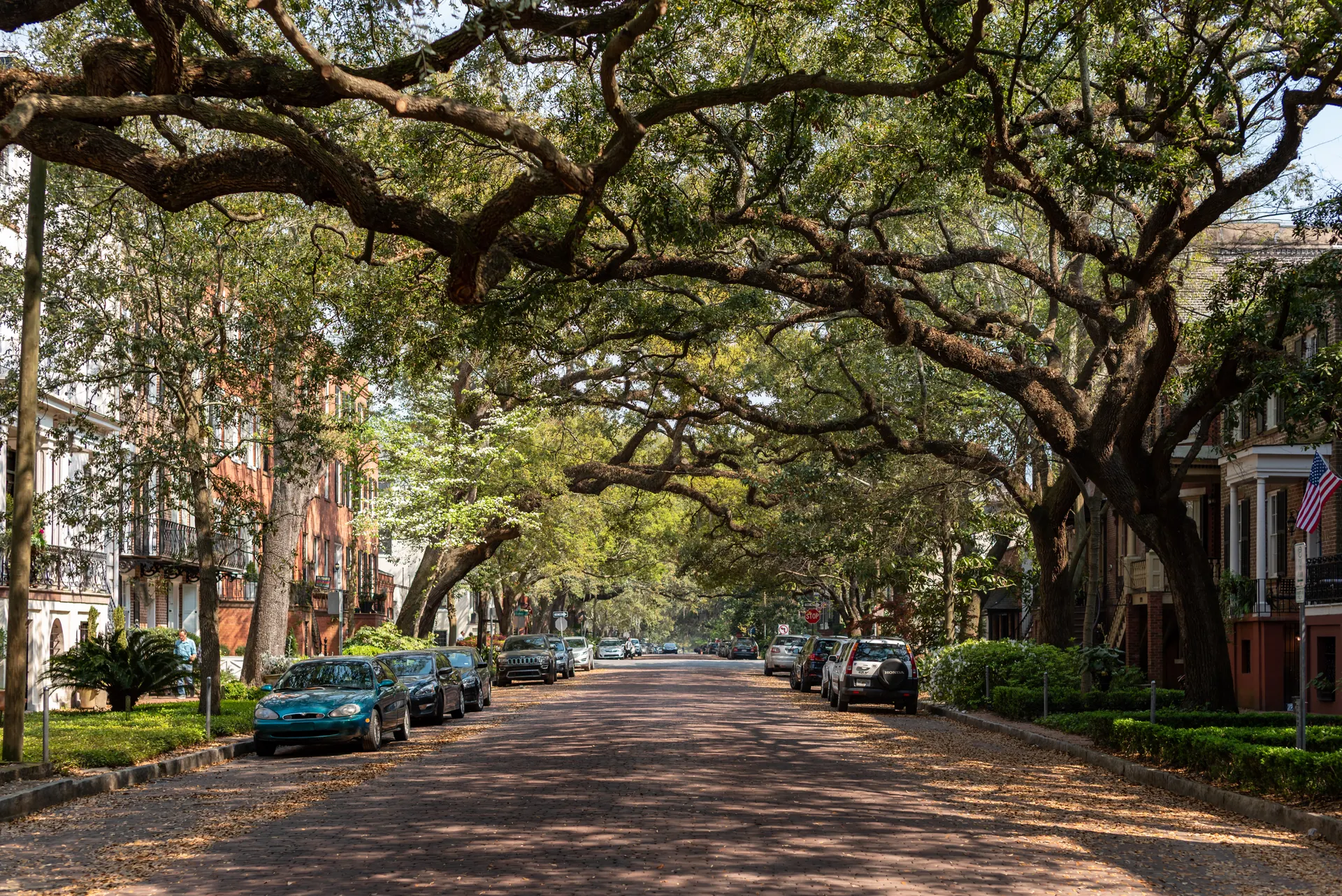
McKinney sits about 6 miles north of Allen along US-75, and as the Collin County seat carries a tree inventory unlike anywhere else on our route. At Tree Service Allen Woods Co, the arborists and crews we coordinate work this city constantly, whether the job is a century-old live oak over a power line or a subdivision ash reaching structural age. McKinney incorporated in 1848, and its canopy reflects that history layered on recent growth — from 54,369 residents in 2000 to 195,308 by 2020, a 259% increase in two decades, across nearly 68 square miles bounded by US-75, US-380, SH-5, SH-121 and Virginia Parkway.
What makes McKinney's tree work different is the ecological seam through the city: Blackland Prairie clay dominates the west, while the east gives way to sandier Eastern Cross Timbers, where native post oak, blackjack oak, cedar elm and bur oak woodland takes over. The 289-acre Heard Natural Science Museum & Wildlife Sanctuary preserves a sample of that transition, and the same oak-heavy canopy runs through nearby streets — large-tree removals, structural pruning and storm cleanup are recurring on the east side, on top of the oak wilt exposure that comes with that much live oak and red oak in one place.
Historic Downtown McKinney adds a third layer: century-old trees crowding tight lots and power lines, while Stonebridge Ranch and other master-planned communities from the 1990s-2000s watch thousands of build-out trees mature into clearance-and-structural-work age. Whether it's a heritage oak downtown, a maturing Stonebridge Ranch shade tree, or a diseased ash near the Heard sanctuary, call (469) 991-2798 — Open 24 Hours, with a crew that knows McKinney block by block.
Local Service
Tree Care for McKinney's Blackland-to-Cross-Timbers Seam
McKinney straddles two ecologies, and that seam — Blackland Prairie clay to the west, sandier Cross Timbers woodland to the east — shapes almost every tree call we coordinate here.
Large Native-Oak Removal Near the Heard Sanctuary
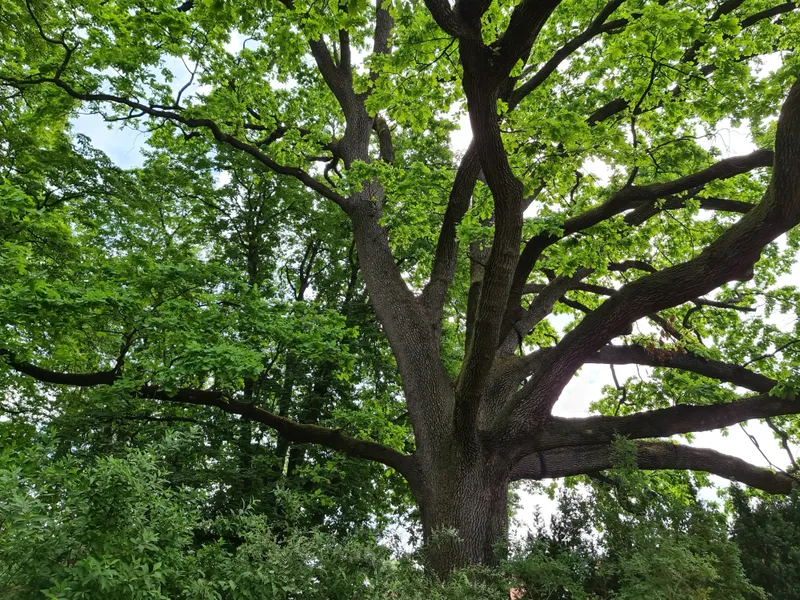
East McKinney's native canopy of post oak, blackjack oak, cedar elm and bur oak — the same woodland preserved at the 289-acre Heard Natural Science Museum & Wildlife Sanctuary — includes mature specimens that eventually become hazardous or dead, needing real rigging and directional-felling experience to remove near a home or floodplain corridor.
The arborists we coordinate size the job to the tree — typically $2,500 to $5,000 for a large 60-80 ft tree, $5,000 to $15,000-plus with crane support — with full haul-off included.
Oak Wilt Management for McKinney's Live Oaks and Red Oaks
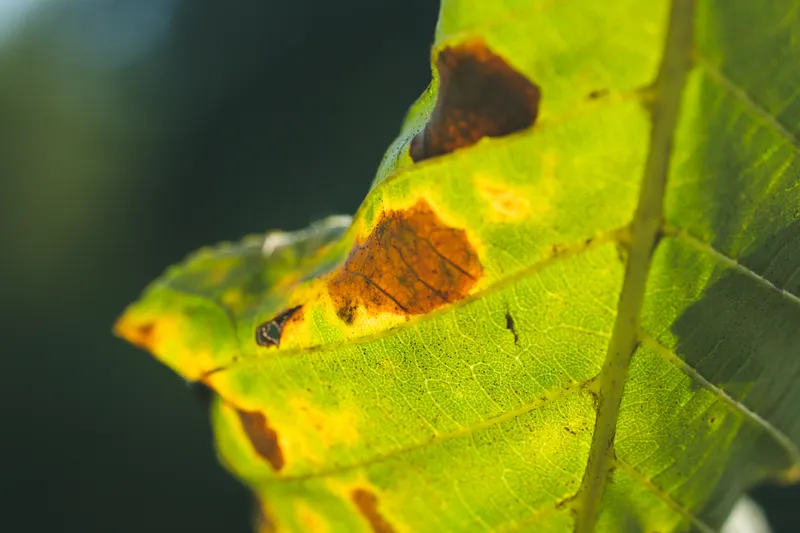
Oak wilt is confirmed in 76 Texas counties and kills live oaks and red oaks at epidemic rates once established, and McKinney's older streets — thick with those species — carry real exposure. The fungus spreads above ground via beetles carrying spores to fresh wounds and below ground through root grafts, so one infected tree on a tight lot can threaten the whole block.
Texans are urged not to prune oaks from February through June, when the fungus and beetle vector are most active — a rule we follow on every McKinney oak.
Structural Pruning for Stonebridge Ranch's Maturing Canopy
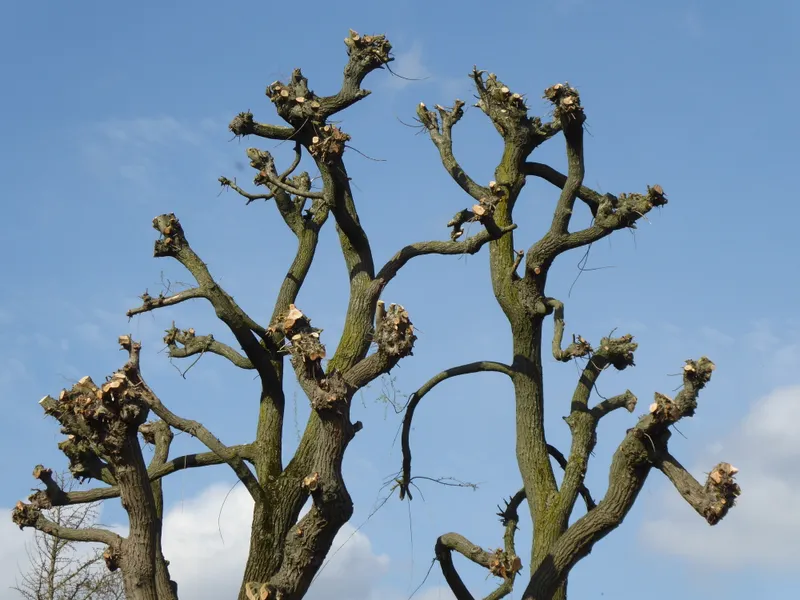
Stonebridge Ranch and McKinney's other master-planned communities built out through the 1990s and 2000s, and the thousands of trees planted then are now reaching real size — often crowding second-story windows and driveways the original landscape plan never anticipated. ANSI A300 standards limit live-canopy removal to about 25% a year, the ceiling every Stonebridge Ranch job works to.
Structural pruning — crown thinning, raising, deadwood removal — protects a tree's long-term shape instead of hacking it back in one season.
Local Service
Serving Downtown McKinney and the City's Newer Subdivisions
From tight, power-line-crowded lots downtown to the newer build-out further out, McKinney's housing stock spans nearly two centuries — and the tree work spans just as wide a range.
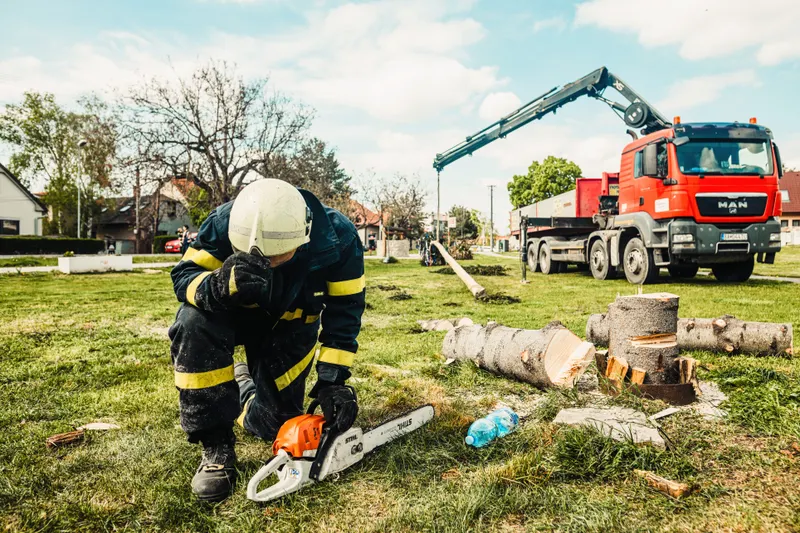
Tree Work Near Power Lines in Historic Downtown McKinney
McKinney's 1848 founding means Historic Downtown carries century-old trees on tight lots, often with power lines running through the canopy — a combination that turns a routine trim into a job requiring real clearance judgment. Crown raising to ANSI A300 standard keeps limbs off the lines without the flush cuts or topping that damage a heritage tree's structure.
The arborists we coordinate plan access around downtown's narrow streets and mature root systems first, since a heritage oak's root flare is often as sensitive as its canopy.

Emerald Ash Borer Risk in McKinney's 1990s-2000s Subdivisions
Emerald ash borer has spread to roughly three dozen Texas counties and is confirmed inside Dallas city limits and Rockwall County, adjacent to Collin — putting McKinney's substantial subdivision ash population in the beetle's path. An untreated ash typically dies within a few years, and U.S. landscape-value losses from a full ash die-off are estimated at $7.7 to $15 billion.
A trunk-injection protocol, generally under an hour per tree on a multi-year cycle, is the standard defense — we assess McKinney ash for galleries and canopy thinning before recommending treatment versus removal.
Storm Cleanup Across McKinney's Wooded Floodplain Corridors
The East Fork of the Trinity River and its tributaries cut wooded, access-limited floodplain corridors through McKinney, and North Texas's violent spring storm season — hail, straight-line winds, occasional ice — drops limbs and whole trees into those corridors on a predictable schedule. Storm-damaged trees near a floodplain edge often carry compromised roots from the same soil saturation limiting access.
Emergency storm response is a same-day make-safe call, with full cleanup following once secured.
Local Service
Fast, Local Response Across All of McKinney

Coverage of Every McKinney ZIP, 75069 Through 75072
We cover all four McKinney ZIP codes — 75069, 75070, 75071 and 75072 — with the same fixed-quote process whether the address is a downtown lot or a Stonebridge Ranch cul-de-sac. McKinney's growth, from 54,369 residents in 2000 to 195,308 by 2020, means there's rarely a week without multiple jobs running.
That familiarity with McKinney's streets and lot layouts means faster evaluation and a quote reflecting the actual job, not a drive-time guess.
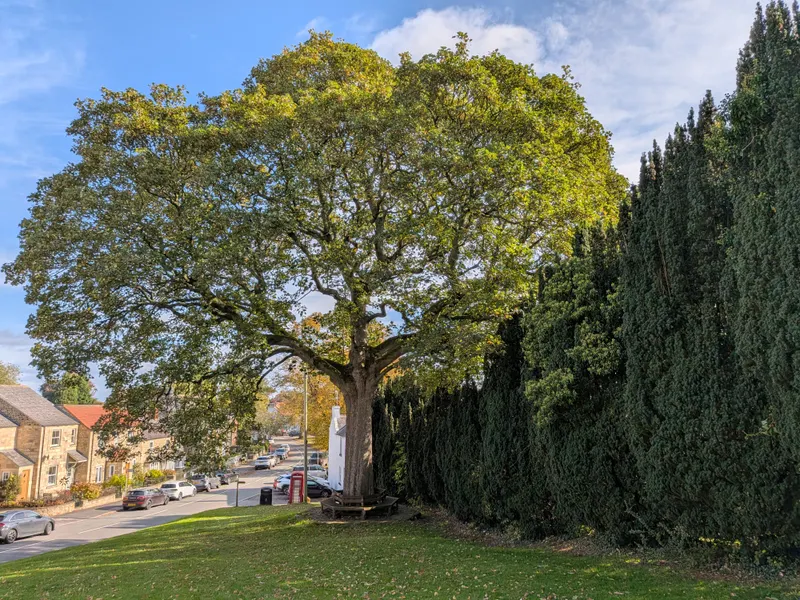
Permit Coordination Under McKinney's Tree Preservation Ordinance
Tree removal inside McKinney's city limits runs through the city's tree preservation ordinance, and the current caliper threshold and any mitigation requirement need confirming per address — rules that differ from Allen's or Fairview's. The crews we coordinate handle the permit application and inspection scheduling.
Dead, diseased and storm-hazard trees generally move fastest through review, but a healthy protected-caliper tree needs the fuller process, which we flag during the on-site assessment.
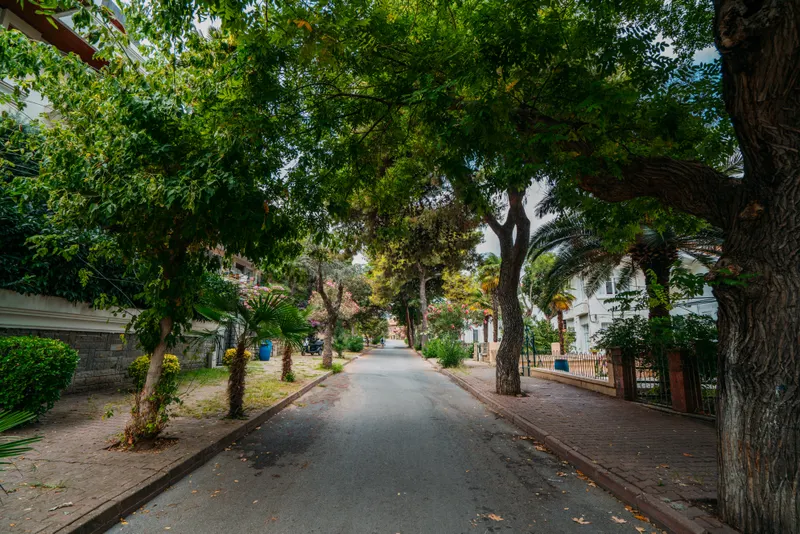
Serving McKinney and Fairview Together
McKinney and Fairview sit next to each other along US-75, and a crew wrapping up a McKinney oak-wilt job is often minutes from a Fairview call. Both towns share native-oak canopy and storm exposure at different densities — heritage downtown trees versus Fairview's large-acreage specimens.
That overlap means a McKinney property isn't waiting on a special trip — the coordinated arborists already work northern Collin County daily.
McKinney's blend of century-old downtown heritage trees, maturing Stonebridge Ranch canopy, and native oak woodland toward the Heard sanctuary makes it one of the most tree-dense cities on our route, with high oak wilt and emerald ash borer exposure. The full Allen tree service coverage area radiates north to McKinney along US-75, and the same arborists work Fairview just south along the same corridor.
Whether a McKinney property needs a hazardous native oak brought down, a Stonebridge Ranch shade tree structurally pruned, or an at-risk ash evaluated for tree health care, the crews we coordinate handle tree removal, tree trimming and stump grinding across all four McKinney ZIPs. Call (469) 991-2798 any time — Open 24 Hours, dispatch knows this city block by block.
Service Area
Serving McKinney & Nearby
Frequently Asked Questions
How much does tree removal cost in McKinney?
Small tree removal up to 30 feet typically runs $200 to $800, a medium tree between 30 and 60 feet runs $800 to $2,500, and a large tree between 60 and 80 feet runs $2,500 to $5,000. Very large or hazardous removals needing crane support, common with McKinney's older native oaks near the Heard sanctuary or on tight downtown lots, can run $5,000 to $15,000 or more. Hardwood oaks common across McKinney also cost 20 to 30% more to grind because of wood density. We give a written quote after an on-site assessment, not a phone-only estimate.
Do I need a permit to remove a tree in McKinney?
Yes, in most cases — the City of McKinney enforces its own tree preservation ordinance and permitting process for protected-caliper trees, and the current threshold and any required mitigation planting need confirming per address before work begins. Dead, diseased, storm-damaged and clearly hazardous trees generally move through approval fastest, since they represent a safety issue rather than a preservation conflict. A healthy tree above the protected caliper slated for removal typically requires the fuller review process. We confirm McKinney's current rule for your specific property and handle the permit application and inspection scheduling as part of the job.
When is it safe to prune oak trees in McKinney?
Texans are urged not to prune or wound oak trees from February through June, since that's when the oak wilt fungus and its sap-feeding beetle vector are most active and a fresh pruning cut is exactly the kind of wound the disease exploits. McKinney's older neighborhoods and the native oak woodland toward the Heard sanctuary carry real live oak and red oak density, which raises the stakes of pruning at the wrong time of year. Outside that window, in the cooler months, oak pruning is considerably lower-risk. If a McKinney oak needs emergency work during the restricted season — a broken limb after a storm, for instance — we treat the wound appropriately rather than skipping the cut.
What are the signs of oak wilt, and can a McKinney oak be saved?
Early oak wilt symptoms include leaf veins discoloring while the leaf margin stays green, followed by rapid wilting and leaf drop that can defoliate a live oak within weeks once the fungus takes hold — a disease now confirmed in 76 Texas counties and lethal at epidemic proportions in Central Texas. The fungus spreads both above ground via beetles carrying spores to fresh wounds and below ground through root grafts connecting neighboring oaks, which is why McKinney's tightly spaced downtown trees are especially vulnerable to neighborhood-wide spread. Early intervention — trenching to sever root grafts between trees, plus fungicide injection on high-value specimens — can sometimes save a tree caught early, though an oak already showing rapid canopy collapse is usually beyond saving. We assess and recommend a treatment or removal plan on a case-by-case basis.
Is emerald ash borer a real threat to McKinney's trees?
Yes — emerald ash borer has spread to roughly three dozen Texas counties and is confirmed inside Dallas city limits and in Rockwall County, which borders Collin County directly, putting McKinney's substantial 1990s-2000s subdivision ash population in its path. An untreated ash typically dies within a few years of infestation once the beetle's larvae girdle the trunk under the bark, and U.S. landscape-value losses from a full ash die-off nationally have been estimated at $7.7 to $15 billion. Trunk-injection treatment, generally under an hour per tree on a repeated multi-year cycle, is the standard defense when caught early. We evaluate McKinney ash trees for canopy thinning and bark damage before recommending treatment versus removal.
Do you offer 24/7 emergency storm response in McKinney?
Yes — we're Open 24 Hours, and McKinney's exposure to North Texas's violent spring storm season, plus the wooded floodplain corridors along the East Fork of the Trinity that channel storm debris onto nearby properties, means we treat emergency calls as same-day make-safe work, not next-week scheduling. A downed limb over a driveway, a leaning tree after straight-line winds, or a split trunk near a fence line all qualify for immediate dispatch. Full cleanup and stump or debris haul-off typically follow once the property is secured and safe. Call (469) 991-2798 any time, day or night, and the coordinated crews already familiar with McKinney's neighborhoods respond directly.
How much of a tree can safely be trimmed at once in McKinney?
ANSI A300 pruning standards direct that no more than about 25% of a tree's live canopy be removed in a single year, a limit that protects the tree from the stress of over-pruning and applies whether the job is a heritage downtown oak or a maturing Stonebridge Ranch shade tree. Going beyond that percentage in one season can trigger stress responses, reduced vigor, and greater vulnerability to disease and pests like oak wilt or hypoxylon canker. The arborists we coordinate with plan multi-year pruning schedules for trees that need more extensive structural correction, rather than forcing it all into a single visit. We never top a tree or endorse 'crape murder' shortcuts on McKinney's crape myrtles or shade trees.
Do you grind the stump and haul away all the debris after a McKinney tree removal?
Yes — full cleanup and haul-off is standard on every McKinney job, not an upsell. Stump grinding is typically priced at $2 to $5 per diameter inch with a roughly $300 minimum, and takes about 30 minutes to 2 hours depending on the stump's size and root spread; hardwood species like the oaks common across McKinney cost 20 to 30% more to grind than softer wood because of density. After grinding, we haul off the ground material and any remaining limb and brush debris so the property is left clean, not with a pile to deal with. Backfill of the resulting hole with soil is included as part of the standard job.
What standards do your McKinney tree crews work to?
The tree crews and arborists we coordinate with on every McKinney job work to ANSI A300 pruning standards and ANSI Z133 safety standards on every removal, trim, and storm response. Many hold the arborist credential, which requires ongoing continuing-education credits to maintain, and some carry the years of specimen-tree experience or formal tree-risk assessment training for hazard evaluation. We coordinate these credentialed pros rather than employing a single in-house crew, which lets us match McKinney's varied job types — heritage downtown oaks, subdivision ash, large native removals — with the right specialists. Ask for the written scope before any crew starts work on your property.
How long does a typical tree removal or trimming job take in McKinney?
A standard tree removal with good access generally takes a few hours to a full day, while a large or crane-assisted removal — more common on McKinney's largest native oaks or tightest downtown lots — typically runs 1 to 2 days. Routine trimming or pruning on a single tree usually takes 1 to 4 hours depending on size and the scope of work. Stump grinding adds 30 minutes to 2 hours per stump once the tree is down. Emergency storm response is handled same-day for the make-safe portion, with full cleanup sometimes following on a separate visit once conditions allow safe access.
Will tree removal equipment damage my McKinney lawn, driveway or fence?
Protecting the property around the tree is part of the job, and the crews we coordinate with plan equipment access and rigging routes before the first cut, which matters especially on McKinney's tighter downtown lots and the access-limited pockets near the East Fork floodplain corridors. Plywood or mats protect turf and driveways from heavy equipment traffic, and directional felling or crane support keeps a large removal away from fences, structures and neighboring trees whenever the site allows it. On truly tight lots, sectional dismantling with rigging replaces a straight felling cut to control exactly where wood comes down. We walk the access plan with the homeowner during the on-site quote, before any equipment arrives.
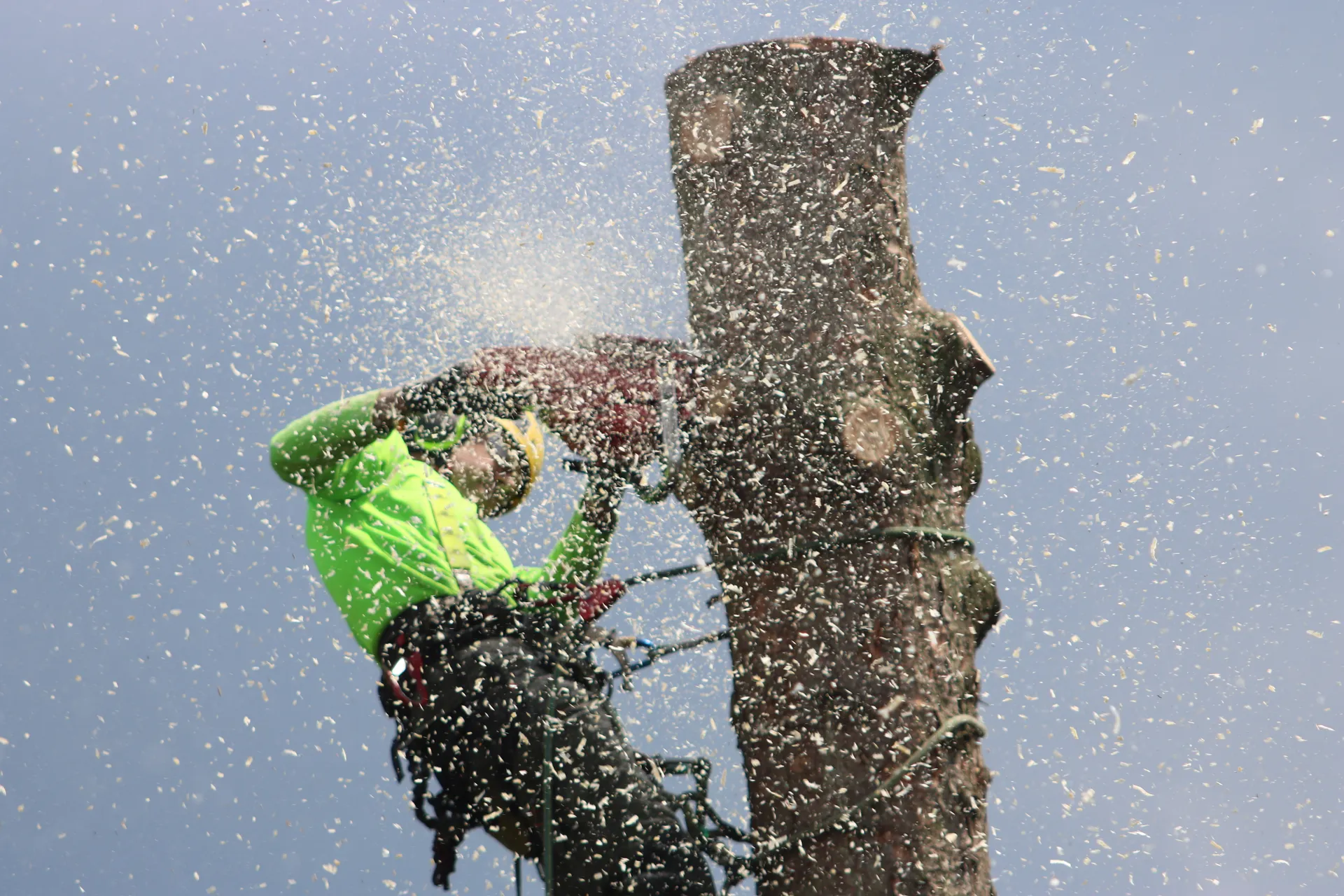
Get a Fixed-Price Tree Care Quote for Your McKinney Property
arborists, ANSI A300/Z133 standards, Open 24 Hours.
(469) 991-2798